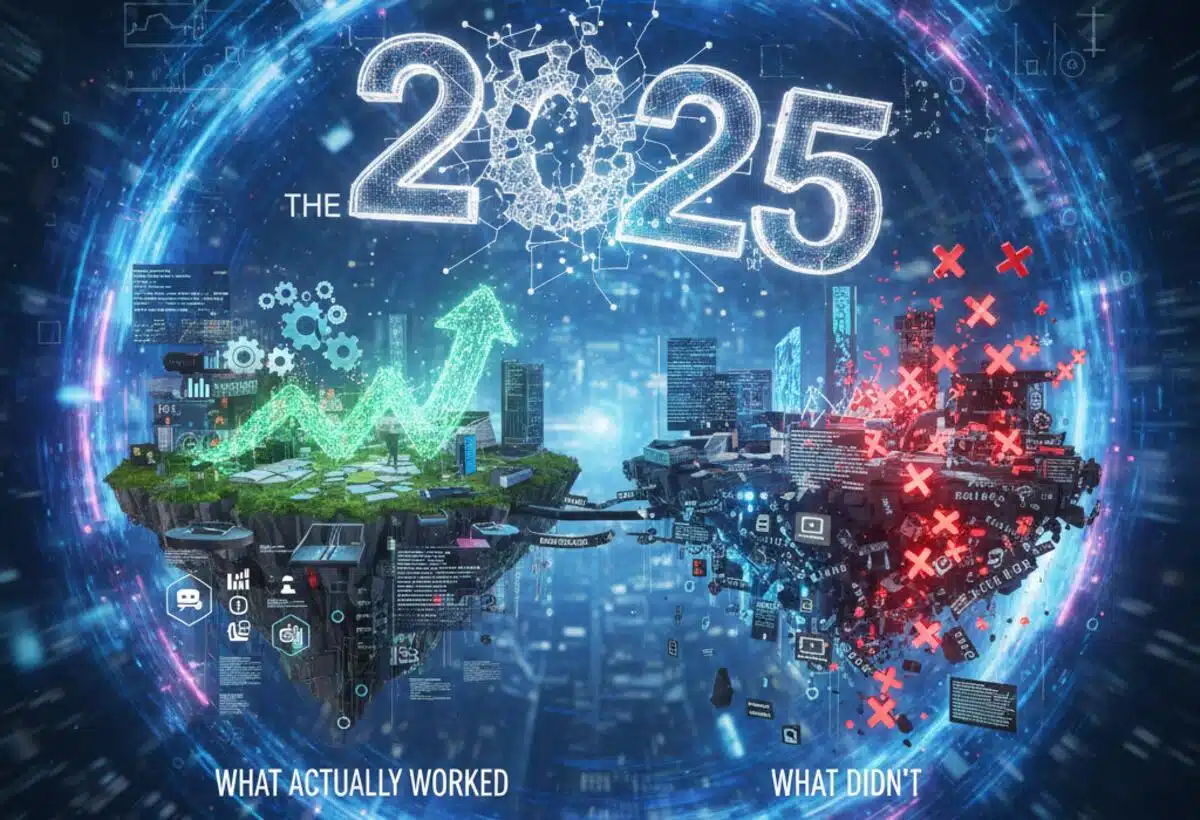
Looking back at the past twelve months, it is hard not to feel a sense of significant whiplash. If you work in the world of search, you probably spent a good portion of the year staring at your analytics with a mix of curiosity and mild dread. We were told for a long time that AI would change everything, but this was the year we actually had to live through the consequences of that promise. It wasn’t exactly the “SEO Apocalypse” that the doomsayers predicted, but it definitely wasn’t business as usual either.
The landscape shifted in ways that felt both inevitable and surprisingly messy. We saw the rise of serious challengers to Google’s throne, a relentless barrage of algorithm updates—including the massive core updates in March, June, and the one currently rolling out this December—and a fundamental change in how people actually interact with a search results page. This decentralization of search has forced us to look at a broader horizon; while Google remains a giant, it is no longer the only game in town. In fact, many users are now gravitating toward a specific set of alternative platforms and specialized search engines that are successfully carving out their own market share in 2026. It was a year of “cleaning house” for many, while others found themselves navigating a difficult digital wilderness, trying to figure out where their traffic went.
The Rise of the New Challengers
Perhaps the biggest highlight of the year was the moment search became a real competition again. For the first time in nearly two decades, Google felt like it was playing defense. The launch and subsequent integration of ChatGPT Search (formerly SearchGPT) into the OpenAI ecosystem changed the way a lot of us think about “searching.” I found myself using it more frequently for complex queries where I just didn’t want to sift through ten blue links and a mountain of ads.
ChatGPT Search didn’t just provide answers; it provided a different kind of experience. It felt more like a conversation and less like a database query. For SEOs, this was a massive “aha” moment. We realized that if we weren’t being cited by these LLMs, we were essentially invisible to a growing segment of the population. This pushed the industry toward a much heavier focus on “Brand Authority” rather than just keyword density. If the AI doesn’t know who you are, how can you establish a presence?
Google, of course, didn’t sit still. Their AI Overviews (AIO) finally stabilized after a very rocky start. Remember when they were telling people to put glue on pizza? Thankfully, those days seem to be behind us. The overviews became more accurate, but they also took up a significant amount of real estate. While early data from SEMrush suggested AIOs appeared in nearly 25% of queries over the summer, that number has settled closer to 16% as we close out the year. Interestingly, the “zero-click” search isn’t the death sentence we feared; in many cases, being cited in an AI Overview actually led to higher-quality, high-intent clicks.
The Lowlights: The Great Spam War and the “Reddit” Problem
It wasn’t all exciting new tech, though. There were some pretty dark spots. The “slop” problem reached a breaking point this year. With AI writing tools becoming so cheap and accessible, the web was flooded with mediocre, repetitive content that didn’t actually say anything new. Google responded with a series of core updates that felt like they were trying to perform surgery with a sledgehammer. The March 2025 update alone aimed to slash low-quality content by nearly 45%, but many felt that helpful, independent sites were caught in the crossfire.
One of the biggest frustrations for many small publishers was Google’s apparent obsession with Reddit and Quora. For months, it felt like no matter what you searched for, the top results were a three-year-old Reddit thread, a marketing forum, and maybe a Pinterest board. While “human” perspectives are great, the bias toward these platforms often pushed out deep, well-researched articles from independent experts. It felt like Google was overcorrecting. They wanted “real people,” but in the process, they ended up rewarding whoever had the loudest voice on a forum rather than the most demonstrated expertise.
The fallout from the Site Reputation Abuse policy also hit hard. We saw major news outlets and massive “authority” sites finally get hit with manual actions for hosting third-party coupon pages and low-quality sponsored content. It was a “lowlight” for those who lost revenue, but honestly, for the health of the web, it was a necessary evil. The era of “parasite SEO” isn’t dead, but it is definitely under significant pressure.
A Shift Toward Real Human Connection
If there is one thing this year taught us, it’s that you can’t fake expertise anymore. The “E” in E-E-A-T (Experience, Expertise, Authoritativeness, and Trustworthiness) became the most important letter in the alphabet. We saw a huge swing back toward traditional digital PR and high-end outreach. Why? Because when the internet is drowning in AI-generated noise, a link from a genuine, high-authority source acts like a lighthouse.
Building links the old-fashioned way—through actual relationships and providing real value—became the only way to stay relevant. The “spammy” link-building tactics of five years ago now feel entirely obsolete. This year showed us that if you aren’t building a brand that people actually recognize and trust, you are just building on sand.
Was it a hard year? Absolutely. I think we all felt a bit exhausted by the constant “Core Update” notifications and the volatility that saw search results fluctuating rapidly. But there’s also something refreshing about the new clarity we have. We know that “good enough” content isn’t sufficient anymore. We know that we have to optimize for both humans and machines. And we know that search is no longer just a one-company game.
It feels like we are entering a more mature era of the internet. The gimmicks are failing, and the fundamentals are winning again. It’s a bit more work, sure, but the results feel a lot more earned.
What do you think was the biggest surprise of the year? Did your site survive the “Reddit-ification” of the SERPs, or are you still finding your footing? We would love to hear your thoughts in the comments below. Are you betting on AI search, or are you sticking with the traditional Google path? Let’s talk about it, and don’t forget to follow us on social media to keep up with the latest shifts in the SEO world!
Sources:
- www.status.search.google.com/summary
- www.blog.google/products/search/google-search-update-march-2024/
- www.semrush.com/blog/semrush-ai-overviews-study/
- www.wellows.com/blog/chatgpt-impact-on-google-search-traffic/
- www.openai.com/index/searchgpt-prototype/

Exa AI Launches Exa Instant: Sub-200ms Search to Power the Agentic Era
Do You Still Need a Website in 2026? Google’s Search Team Weighs In