
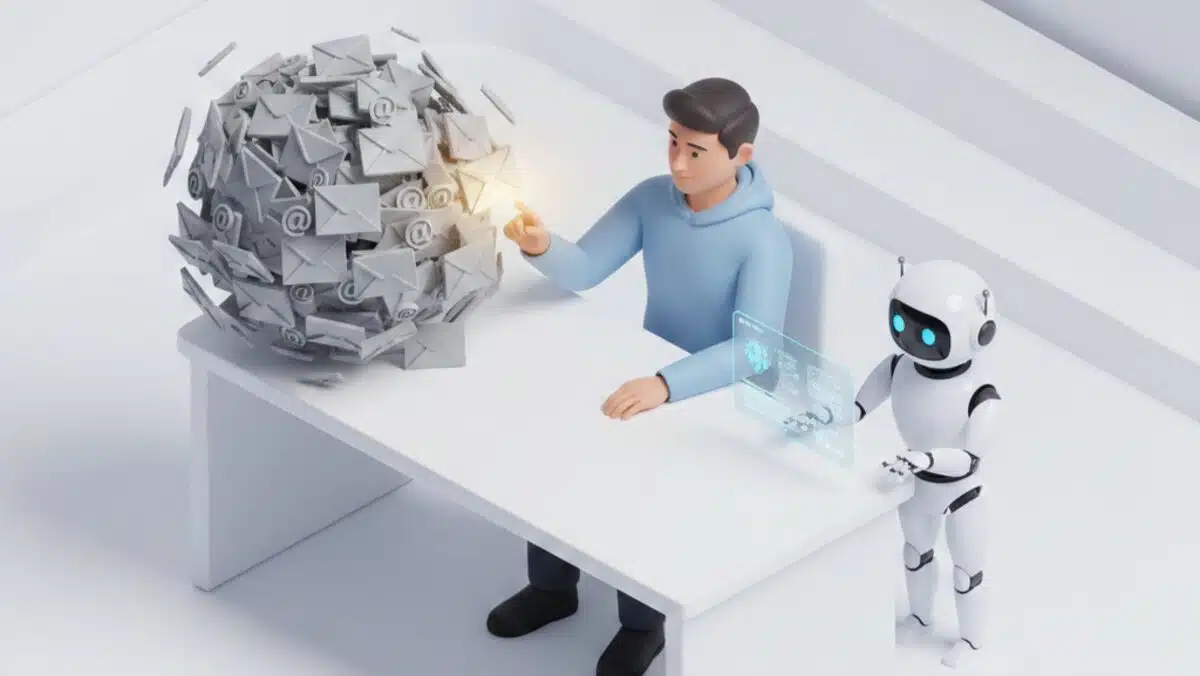
You know that feeling when you open your inbox and see twenty different subject lines that all sound exactly the same? It’s usually some variation of “Quick question” or “Can we hop on a call?”—and your thumb is already swiping left before you’ve even read the first sentence. We’ve all been there. Most of us are living in a world where our digital lives are constantly bombarded by noise, and yet, here you are, trying to figure out how to do outreach that actually works.
It’s a weird paradox, isn’t it? We have more tools than ever to reach people, but it’s never been harder to actually connect. If you’re feeling like the old playbooks are failing, you’re right. They are. The reality of outreach has shifted. It’s not just about “reaching out” anymore; it’s about breaking through. It’s about being the one email or message that doesn’t feel like it was spat out by a machine, even if a machine helped you write it.
Let’s talk about what outreach really is. If you look at a textbook, it might say something about “the process of establishing a relationship with individuals or organizations to achieve a goal.” That’s fine, but it’s a bit dry. In the world we’re living in right now, outreach is more like an act of digital empathy. It’s about proving to someone that you’ve done the work, you understand their world, and you actually have something worth their time. It’s less about the “sale” and much more about the “bridge.”
Key Takeaways
- Outreach is no longer a numbers game based on mass automation; it’s evolved into a strategy where you use AI to do the heavy lifting while keeping a real person in charge of the final word.
- Success now depends on shifting from “volume-first” to “value-first” interactions. AI can handle the data and the initial drafts, but you’re the one who needs to add the creative spark and the human touch.
- If you can find that sweet spot between using tech to scale and staying genuinely personal, you’ll turn cold leads into the kind of long-term partnerships that actually last in an automated world.
The New Architecture of Connection
For a long time, outreach was treated like a factory. You’d pour a thousand leads into the top, pull the lever on an automation tool, and hope a few customers fell out the bottom. This “factory” mindset is exactly why search engines have tightened the leash. If you’ve been following the recent chatter on how Google views link building and outreach, the message is clear: the era of “gaming the system” with low-effort, automated backlink requests is over. They’re looking for the same thing your prospects are—genuine authority and relevance.
But people have developed a “spam-filter” in their brains that is incredibly efficient. If your message smells like a template, it’s dead.
The shift we’ve seen lately is toward what people are calling “Human-in-the-loop” systems. This isn’t about ditching AI—far from it. It’s about using AI to do the boring, soul-crushing parts so you can do the part only a person can do. Think of AI as your research assistant who can read ten thousand LinkedIn posts and three hundred annual reports in five seconds. That assistant hands you the highlights, and then you—the human—use that information to write a message that actually resonates.
Why does this matter? Because in a world of infinite AI content, the “human” becomes the premium. Authentic, messy, nuanced communication is now a competitive advantage. When you address someone’s specific challenge—maybe a recent shift in their industry or a specific quote they gave in a recent interview—you’re showing them that they aren’t just a row in your spreadsheet. You’re showing them you care.
The Tools of the Trade (and Why They Aren’t Enough)
You probably have a stack of tools already. Maybe you’re using things like HubSpot, Outreach.io, or Salesmate. These platforms have become incredibly sophisticated. For instance, the latest iterations of tools like “Sandy” in Salesmate or the various “Revenue Agents” in enterprise platforms are now doing things we only dreamed of a few years ago. They can predict which leads are “warm” based on thousands of tiny signals—everything from how long they stayed on your pricing page to whether they clicked a link in a partner’s newsletter.
But here’s the thing: a tool is just a megaphone. If you’re shouting nonsense, the megaphone just makes you more annoying.
The successful approach right now is “Agentic AI.” This is where you have AI agents that don’t just send emails, but actually manage workflows. They can handle the initial research, flag when a lead has a “trigger event” (like a new funding round or a change in leadership), and even draft a first version of an outreach message. But the magic happens in the “review” phase. You shouldn’t just hit “send all.” You should be tweaking, adding a personal observation, or adjusting the tone to match who you are.
I’ve seen this work brilliantly in the B2B space. Imagine you’re trying to reach a Marketing Director. Instead of a generic “I can help you grow,” your AI assistant flags that she just spoke at a conference about “Treatonomics”—that trend where people buy small luxuries as a form of self-care. Your outreach then becomes a conversation about how your service aligns with that specific cultural shift. That isn’t just “personalization”; it’s relevance. And relevance is the only thing that beats the delete button.
Strategy Over Scripting
If you’re looking for the perfect script, I have bad news: it doesn’t exist. As soon as a script becomes popular, it becomes ineffective because everyone starts using it. Instead of scripts, you need a framework.
First, there’s the “Hook.” This is the first sentence. It’s the most important part of your outreach because it determines if the second sentence ever gets read. A good hook isn’t about you; it’s about them. It could be a question about a recent project or a genuine compliment on a piece of work they produced.
Then comes the “Value.” This is where most people trip up. They start listing features. “Our software does X, Y, and Z.” Nobody cares. What they care about is their problem. The value statement should be: “I noticed you’re struggling with X, and I’ve helped people in your exact position solve it by doing Y.”
Finally, the “Call to Action” (CTA). Keep it low friction. Don’t ask for a 30-minute demo right out of the gate. That’s like asking someone to marry you on the first date. Ask for something simple: “Would it be worth a two-minute chat to see if this fits your current priorities?” or “I have a short video explaining this—mind if I send it over?”
It’s about lowering the “cost” of replying. If replying to you feels like a chore, they won’t do it.
The Psychological Game
We don’t talk enough about the psychology of the person sending the outreach. It’s exhausting, isn’t it? Sending out fifty messages and hearing nothing back can make you feel like you’re shouting into a void. It’s easy to get discouraged.
But you have to realize that a “no” or a lack of response is rarely personal. People are busy. Their inboxes are battlegrounds. Sometimes, your message arrives at the exact moment they’re dealing with a crisis, and it just gets buried.
This is why “Persistence Plays” are so critical. Statistics show that most outreach succeeds on the fourth, fifth, or even eighth touchpoint. But there’s a fine line between persistent and pests. The key is “Value-Add Follow-ups.” Don’t just send a “Following up on this” email. That’s useless. Instead, send something new. “Hey, I saw this article and thought of our conversation last week—it reminded me of the challenge you mentioned.” You’re staying on their radar by being helpful, not just by being loud.
The Rise of Multi-Channel Ecosystems
If you’re only using email, you’re missing the party. Outreach in 2026 is an omni-channel experience. You might start with a LinkedIn connection (without a pitch!), then leave a thoughtful comment on one of their posts. Maybe a few days later, you send an email that references that LinkedIn interaction.
The goal is to become a “familiar face” in their digital neighborhood. This is where “Brand Ecosystems” come in. If your company is producing great content, hosting webinars, or active in industry communities, the person you’re reaching out to is much more likely to recognize your name.
Think about it. If a stranger knocks on your door, you’re hesitant. If a neighbor you’ve seen at the local coffee shop knocks, you’re much more likely to open it. Multi-channel outreach turns you from a stranger into a “digital neighbor.”
The Ethical Boundary
As AI becomes more powerful, we’re entering a tricky ethical space. There are already regulations popping up in places like the EU and several US states that require you to disclose when you’re using AI for certain types of interactions. But beyond the law, there’s the “Trust Factor.”
If a prospect finds out they’ve been talking to a bot for three weeks and they thought it was a human, that trust is gone forever. You can’t build a relationship on a lie. The best way to handle this is transparency and boundaries. Use AI to assist, but never to deceive. Let the AI handle the data, but let the “soul” of the communication be yours. People can sense when there’s a person on the other end, and that’s what they’re looking for.
What Does Success Actually Look Like?
We’re often obsessed with “open rates” and “click-through rates.” Those are fine, but they’re vanity metrics. The real metric for outreach success is “Meaningful Conversations.”
Are you getting people to engage with you? Are you building a pipeline of people who might not buy today but will definitely remember you when they’re ready?
I’ve found that the most successful outreach often results in a “Not right now, but let’s stay in touch.” That’s a win. You’ve earned a spot in their network. In a world where everything is moving faster and faster, being the person who is willing to play the long game is a superpower.
Navigating the “Noise”
Let’s be real for a second. The amount of content and outreach being generated right now is staggering. It’s estimated that billions of interaction signals are processed every week by these massive sales platforms. It’s easy to feel like you’re just a drop in the ocean.
But you have to remember that most of that “ocean” is low-quality junk. Most people are still trying to use 2022 tactics in a 2026 world. They’re still trying to “hack” the system.
The real “hack” is actually caring. It sounds cheesy, I know. But it’s true. If you spend ten minutes really looking into a company and their specific needs before you send a message, you are already ahead of 90% of your competitors. Quality beats quantity every single day of the week.
Looking Ahead
As we move forward, we’re going to see even more “AI Agents” acting as gatekeepers. Consumers and businesses are starting to use their own AI to filter out sales calls and emails. Your outreach will eventually have to convince an AI gatekeeper that you’re worth passing through to the human.
This means your content needs to be “machine-readable” and “intent-aligned.” But more importantly, it means you have to be so compelling that the human on the other side wants to hear from you.
The future of outreach isn’t less human; it’s more human. The tools will get better, the data will get sharper, but the heart of it—the actual connection between two people trying to solve a problem—that stays the same.
Frequently Asked Questions
What is the purpose of outreach?
The purpose is to build a bridge between your solution and someone who has a problem. It’s not just about getting a “yes” on a sale; it’s about establishing a professional relationship, building brand awareness, and creating a pipeline of opportunities that can grow over time.
How do you do outreach effectively?
Effective outreach starts with deep research. You need to identify the right person, understand their specific pain points, and then craft a message that offers genuine value. It requires a mix of the right technology (to help with scale and data) and a human touch (to ensure the message is authentic and relevant).
What are the different types of outreach?
While email is the most common, outreach also includes LinkedIn messaging, social media engagement, cold calling (which is still effective in certain niches), influencer partnerships, and even “physical” outreach like sending personalized gifts or attending niche events. The most successful strategies usually combine several of these channels.
Is cold outreach still effective?
Yes, but only if it doesn’t feel cold. The old way of sending thousands of identical emails is dead. The “new” cold outreach is hyper-personalized and data-driven. If you can prove in the first sentence that you know who the person is and what they care about, cold outreach can still be your most powerful growth engine.
How do you personalize outreach without it feeling fake?
Avoid using “merge tags” for the sake of it (e.g., “I see you are the [Job Title] at [Company]”). Instead, look for “unstructured” data—a podcast they were on, a specific challenge their industry is facing, or a project they’ve recently completed. Use that information to start a real conversation. If you’re using AI, use it to find these “hooks,” but write the final message yourself.
How often should I follow up?
There’s no magic number, but a sequence of 5 to 7 touches over a few weeks is standard. The key is to vary the “value” in each follow-up. If you just ask “Did you see my last email?”, you’re not helping. If you share a relevant case study or a piece of news, you’re building trust even if they don’t reply right away.
Wrapping Up
I’d love to hear what’s working for you right now. Have you found a specific “hook” that’s getting great response rates? Or are you struggling with the new AI gatekeepers? Leave a comment below and let’s talk about it. And if you found this helpful, make sure to follow us on Facebook, X (Twitter), or LinkedIn for more deep dives into the changing world of outreach.
Sources
- www.dmexco.com/stories/6-tips-to-leverage-the-marketing-trends-for-2026/
- www.quad.com/insights/27-marketing-trends-and-predictions-for-2026
- www.blog.adobe.com/en/publish/2025/12/09/four-creative-trends-define-marketing-2026
- www.kantar.com/Campaigns/Marketing-Trends

Is Blogging Dead? 5 Blogging Strategies That Are Really Dead
The Importance of Metrics in Marketing Outreach Strategies