
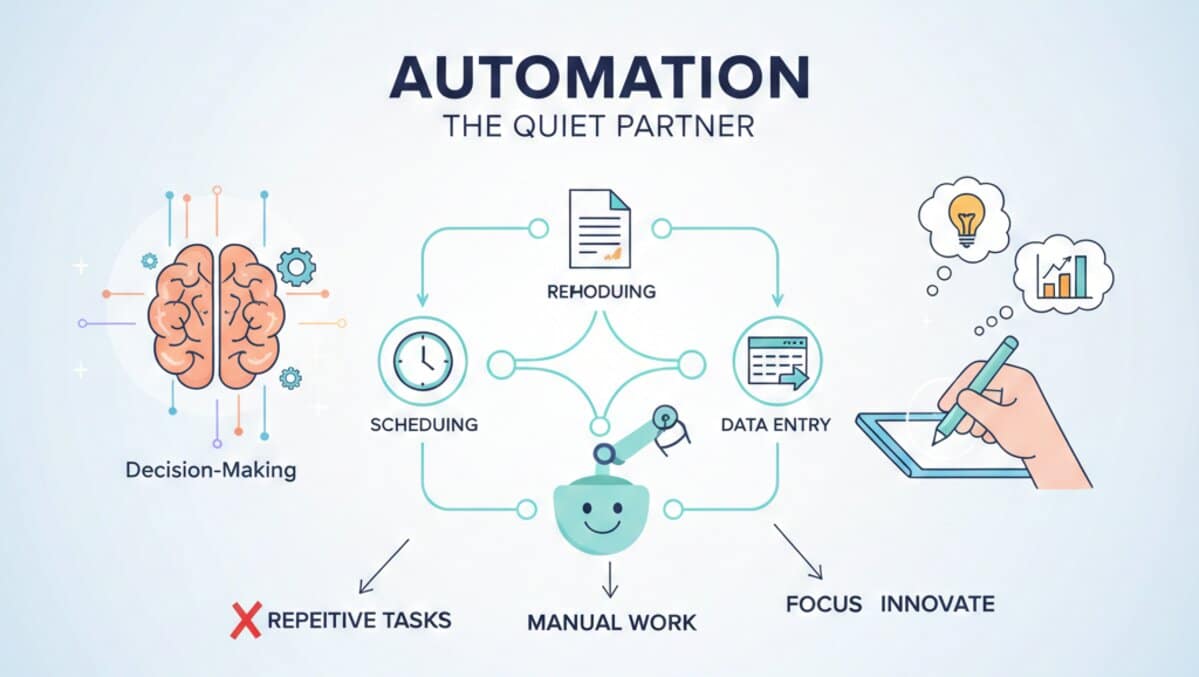
Now that we have AI in our systems and workflow, automation is no longer a nice-to-have upgrade. Its practicality and proactiveness have helped reduce stress and burnout in your team. But have you really seen and experienced the full benefits of automation beyond just saving time?
The benefits lie in its consistency and accuracy, so you can focus on what truly matters in your work or requires your utmost concentration. Automation will handle all the routine tasks while you focus on your creativity, growth, and decision-making.
Workloads increase, and so do business expectations. Speed and accuracy are no longer optional. When you understand how automation reduces manual work, you can meet those expectations while also preserving your energy and resources.
You can also support your team’s effort rather than replacing them, and this will give them the time to develop their skills and confidence to accomplish their tasks. Here’s how automation reduces manual work and how to use it correctly.
What Automation Really Means in Everyday Work
The word automation can sound pretty scary to the workforce. Instead of seeing it as a threat to employment, automation takes on tasks with repeated human effort. It works on predictability and rule-based activities. These include scheduling, reporting, and data entry. Instead of investing time writing your report at the end of the day, automation helps make the process convenient and fast.
These tasks do not require creativity and judgment. All automation does is reduce distractions and interruptions as you switch between tools just to check if your information is correct. As long as the rules are set, you can complete tasks with the right data. Reliability is one of the biggest reasons why automation reduces manual work.
When you start writing your report and double-checking the data, you can be tired, distracted, and even overwhelmed. But automation does not get tired and distracted. You can get the same result the same way it is created, but with fewer delays.
These may sound like small improvements, but when you keep using automation throughout your workflow, you start to notice the fast turnaround times and cleaner data. It becomes a quiet partner at work that will support you in the background.
How Automation Reduces Manual Work at the Process Level
Automation connects systems and actions into a single flow, so you do not need to handle tasks one step at a time. It allows information to move automatically from one stage to the next and eliminates bottlenecks that will only slow you down. Automation will boost your productivity by reducing manual work in the process.
A benefit you will love about automation is the elimination of guesswork. When the rules are properly set, the system will automatically start the process it needs to do. As long as the specifications are met, automation takes place. This clarity is one reason why automation reduces manual work and also improves consistency across teams.
An example of how automation helps at the process level is the real-world environment. Think about onboarding a client, processing an order, or simply approving a request. With automation, you can ensure that every step and the data necessary for the process are followed. You can save time and even prevent missing data.
Automation helps processes become more connected to help you gain visibility on what is happening in real time. You can start tracking progress through your business dashboards so you can make faster decisions and quickly respond to issues.
Key Methods That Make Automation Effective
You need to understand the methods behind automation to know exactly how you can get the value and benefits in your workforce. These methods show how automation reduces manual work by attacking the root causes of inefficiency.
- Automation eliminates repetitive tasks. It handles data entry for you, like invoicing and report generation, so you do not need to conduct manual input. The robotic process automation will fill in the details once the conditions are met and the data has been added.
- Automation with AI and machine learning leads to intelligent decision-making. When you use these tools together, you can interpret emails and documents. The rise of the AI-powered operating system is a strong example of how systems are becoming more responsive and context-aware.
- Automation also requires you to connect apps together so you can remove the manual aspect of the process. When you connect the apps, your data can flow smoothly, and you do not have to deal with copying and pasting data.
- Automation also helps with reducing formatting errors and missing details from the beginning of the process. With digital forms and templates, you can provide a standardized system for your customers, clients, and the whole team. All they need to do is input the necessary details. The automated process will not even start once the data needed has been added. You now have the necessary details in the same format.
Automation is a preventive solution in your system. Instead of a need to fix mistakes, it helps proactively prevent problems from even happening. This allows room for improvement instead of spending the time to fix issues.
Core Benefits That Matter and Beyond
One of the most important core benefits of automation is accuracy. As most work becomes more digital, automation needs to produce records that are accurate. Automation follows rules exactly, which explains how automation reduces human error across tasks. If you deal with data entry work, approvals, or reporting, you get fewer errors with automation.
You will never have to experience delays. As soon as the requirements have been met, automation does its work swiftly. It is still not a perfect tool, but with all the time you have in your hands and your work dashboard, you can identify problems and produce solutions quickly. You can also use the time to check the results.
Another benefit you will instantly experience is speed. If you have a manual task that takes days to complete, automation can turn it into hours or even minutes. You can have a faster pace, letting you respond to customers quickly and keep your projects moving and submitted on time.
A core benefit of automation that will take a while to see is scalability. Workloads increase over time, and the extra time will require you to hire people immediately. This is also where automation reduces manual work, directly supporting your people. When you remove repetitive tasks, your employees can focus on problem-solving and planning.
How Automation Reduces Manual Work Across Industries
Automation is for all. It is flexible enough to support businesses across many industries. For people working in finance, automation can handle the invoicing and payroll processing. This way, they can reduce delays and ensure everything they do is compliant.
Customer service is another profession that benefits greatly from automation. When AI and automation came into play, customer service was one of the first areas that benefited from their features. The automation in chatbots helps customers and even clients to route people to the right response quickly, allows customer support to know the issues beforehand, and lets agents focus on complex issues.
Another paper-heavy profession is human resources. Before automation, people needed to fill out forms manually, and applicants needed to add almost everything to their resumes just to ensure they were qualified. With automation, HR teams can set the necessary information they need and create forms and steps to ease their and employees’ applications for leave requests, pay increases, and more.
The best team that benefits well from automation is the IT team. They monitor several tasks from hardware to the system. With automation, they can easily monitor their ticket triage and the tasks they need to fix and have resolved.
Meanwhile, in logistics and manufacturing, automation and robotics improve accuracy and speed in supply chains. These examples show how automation reduces manual work by adapting to different environments while delivering the same core benefits: speed, consistency, and reliability.
Scaling Complex Workflows Without Complexity
If you work as an IT professional, you know how challenging it is to build complex workflows. These require tons of effort and large budgets with short deadlines. Navigating the real costs between open-source and proprietary SDKs is often the first hurdle in these projects. Today, the shift to low-code and even no-code tools plays a major role in how automation reduces manual work.
This shift helps settle the debate between free vs paid productivity tools, as the goal is to find what allows you to start automating processing without deep technical knowledge and remove barriers to adoption. This means you no longer have to wait for months to finish complex workflows. In addition, you can also see the benefits almost immediately when you start connecting departments and automating approvals.
The reduced handling time and improved conversion rates are some of the major benefits of automation, with scaling complex workflows without disrupting your daily workflow. Over time, automation becomes a continuous improvement rather than a one-time solution.
Creating a Culture That Welcomes Automation
When you explain how automation reduces manual work as a way to support employees, not replace them, resistance naturally decreases. Many think that automation only requires technology and a system for it to work. You need to understand its purpose and make it a tool for empowering your team.
Ensure your automation initiative aims to help and improve the current process of your team, and not simply an additional tool. When you encourage and involve your team, you can build a system that knows exactly what they need.
Don’t forget to include training in your plans. Even if you have taken into consideration your team’s ideas, the system you build with automation still has some new features. Ensure you have proper onboarding and learning time. This way, automation becomes part of their daily workflow rather than a tool that will just complicate their daily tasks.
The Business Value of Workflow Automation
Workflow automation may seem like a giant task to implement, but the value it brings to your cost, employees, and the business itself can help you focus on the more important and critical aspects. If you hesitate on bringing automation to your business, get to know all the business benefits here:
- You can eliminate repetitive tasks and help teams focus on strategy and planning.
- You can reduce errors among your team when you standardize processes and automate data handoffs.
- You can also boost productivity by getting fast approvals and notifications.
- The real-time tracking shows accountability, KPI, and clear ownership. You can also see the progress in each step of a task.
- When you have faster and more consistent service, your customers will love your business more. This can also lead to customer recommendations as well.
- If you want to support your team as the workload increases, automation will assist your scalability without increasing your headcount.
- Automation in business can also speed up onboarding for newly hired employees, new policies, and new clients.
- Finally, automation in business can help you get ready for the future digital environment.
Automation in Marketing and Customer Engagement
Another industry that will benefit greatly from automation is marketing. You can remove the manual effort to create email campaigns and customer engagement through automated responses and updates. If you are still wondering if businesses should invest in marketing automation, the answer is YES!
Automation in marketing and customer engagement lets you personalize your messages and social media posts without hassle. You can send multiple messages at once to scale your business without sending them one by one and reach the right audience at the right time.
When you maintain accuracy and consistency in marketing, you can strengthen customer trust and improve your campaign performance. It also demonstrates how automation reduces human error in messaging, scheduling, and reporting.
Why Automation Is a Competitive Advantage
Businesses that understand how automation reduces manual work are better prepared to compete in this digital and interconnected environment. Through automation, you can respond quickly and scale efficiently. If you are still skeptical of automation, how about trying small automation initiatives in your business?
You can then integrate them into your workflow, and over time, you can see major improvements compound. When that happens, you will gain a stronger position in the market. Business is not just competing on revenue over time, but also on how businesses react and provide solutions fast. Automation will not only save you time but also ensure your team can be at their best today and for your business’s future.
For more deep dives into the world of business automation, make sure to follow us on Facebook, X (Twitter), or LinkedIn!
About Author: Abby Tan is a content writer with a knack for turning ideas into engaging, SEO-friendly stories. With years of experience in blogging and Pinterest strategy, she writes about travel, skincare, food, and the latest in tech with equal passion and creativity. Abby is currently part of the writing team at Softvire, a leading IT distributor, where she helps bring digital content to life.

CRM Marketing Automation in 2026: The Strategic Guide to Scaling Your Revenue
The Industrialization of Fraud: How to Stay Secure in a Deepfake World