
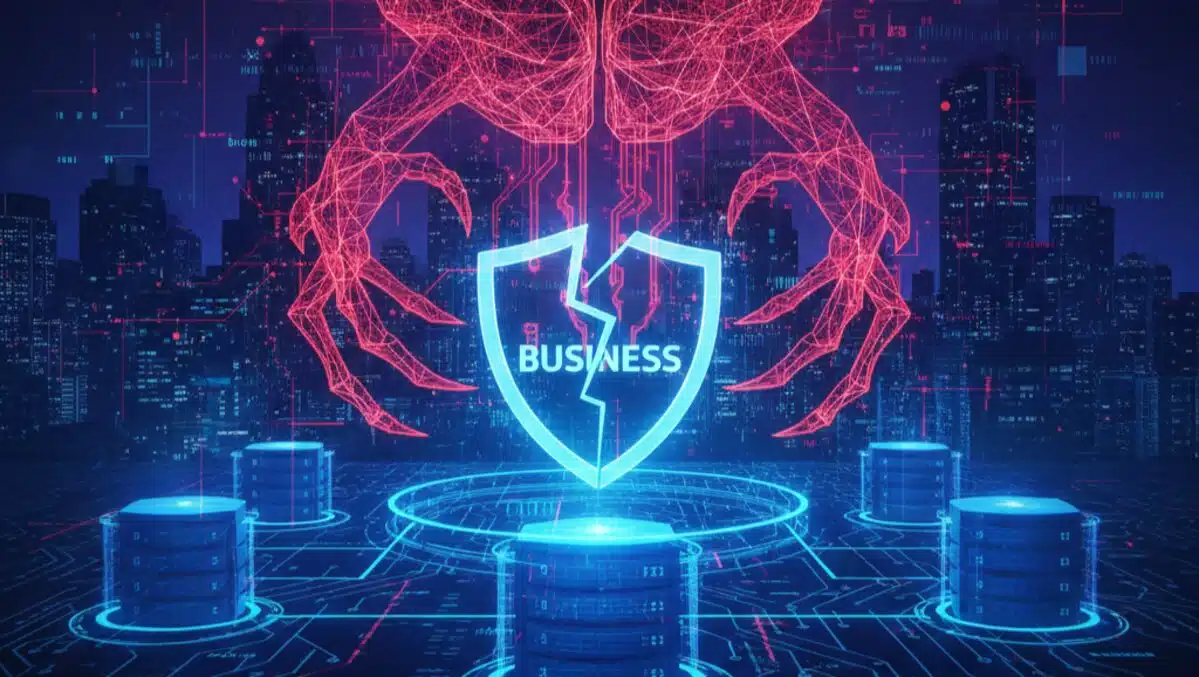
You probably remember a time when a “hacker” was a distant, almost mythical figure—a teenager in a dark room trying to guess a password. That image is long gone. Today, when we talk about cybercrime, we aren’t just talking about bored individuals or even small groups. We are talking about a massive, industrialized economy that operates with the efficiency of a Fortune 500 company.
If you’ve received a suspicious text that sounded exactly like your bank, or a voice message from a “boss” that sounded eerily familiar, you’ve felt the edges of this new reality. Cybercrime isn’t just a technical glitch or an IT headache anymore; it’s a sophisticated business model that goes after the person behind the screen just as much as the hardware.
Key Takeaways
- Modern cybercrime has moved beyond isolated hackers to a fully industrialized global economy, with costs now exceeding $10 trillion and impacting every sector from retail to critical infrastructure.
- The emergence of agentic AI and sophisticated deepfakes means your digital identity and voice are the new primary targets for high-stakes fraud.
- Protecting yourself and your business requires moving past traditional tools like legacy VPNs toward a zero-trust mindset that prioritizes verified identity and proactive resilience.
The Shift from Service to Industrialization
For the last few years, we’ve seen the rise of “Ransomware-as-a-Service.” It was a simple enough concept: professional developers created the malicious code and then rented it out to “affiliates” who did the actual dirty work of breaking into systems. But lately, this has evolved into something much more organized. We aren’t just seeing services anymore; we’re seeing full industrialization.
Think about how a factory operates. There’s an assembly line, people with specialized roles, and a total focus on scaling up. That’s exactly how modern cyber syndicates work today. They have HR departments, customer service portals for victims, and negotiation specialists who help “manage” the extortion process. Have you ever considered that a criminal organization might have a “help desk” to help you buy cryptocurrency so you can pay them? It’s a bizarre reality, but it’s where we are.
In the retail world, we just saw a wave of these coordinated attacks. Big names like Marks & Spencer, Harrods, and the Co-op in the UK dealt with massive disruptions because of this industrial-scale approach. It wasn’t just about one store getting hit; it was a strategic strike against the third-party providers they all relied on. When you realize that 93% of ransomware victims have their data stolen even if they pay the ransom, the predatory nature of this industry becomes crystal clear.
The AI Arms Race: When Machines Fight Machines
It’s hard to have a conversation about the internet lately without mentioning artificial intelligence. In the world of cybercrime, AI is the ultimate force multiplier. We’ve entered the era of “agentic AI”—autonomous systems that can discover vulnerabilities, rewrite their own code to bypass security, and launch attacks without a human ever touching a keyboard.
This speed is becoming the new baseline for both sides. We’re seeing breakthroughs like Exa AI’s new “Instant” search API, which delivers results in under 200 milliseconds. While this is a massive win for developers building helpful agents, it also highlights the terrifying velocity of the “Agentic Era.” When an AI can crawl the live web and find specific targets in the blink of an eye, the window for human reaction effectively disappears.
Ever notice how those phishing emails don’t have the obvious typos they used to? That’s AI in action. It can generate perfectly written, highly personalized messages in seconds. But it goes deeper than that.
Voice cloning and deepfakes are now standard tools for fraud. There was a notable case in Hong Kong where a finance worker was tricked into transferring $25 million after a video call with what looked and sounded like the company’s CFO. As it turns out, everyone on that call—except the victim—was a deepfake. When your own voice and face can be synthesized with just a few seconds of audio from a social media post, the concept of “trust” changes completely. It’s why we’re seeing a 1000% increase in voice-cloning fraud attempts targeting financial institutions.
The Psychology of the Click: Why Smart People Fall for It
You might think you’re too smart to be scammed. But the truth is, cybercrime today doesn’t target your lack of intelligence; it targets your biology.
Criminals use “cognitive triggers” like urgency, fear, and authority. When a notification pops up saying your bank account is locked and you have ten minutes to “verify” who you are, your brain’s “fight or flight” response takes over. That shot of adrenaline actually makes it harder for the logical part of your brain to function. You aren’t being “stupid”; you’re being human.
Psychological profiling has become a big part of the industrialized cybercrime world. Groups now spend time researching their targets—a process called “pretexting”—to find the perfect hook. Maybe it’s a fake invoice for a service your company actually uses, or a message from a “colleague” about a project you’re currently working on. The level of detail is, frankly, terrifying. It’s no longer about blasting out a million emails and hoping for the best; it’s about sending ten emails that are so spot-on that five people feel they have to click.
When the Digital Hits the Physical: IoT and Infrastructure
We’ve spent decades worrying about our laptops and servers. But look around your office or home. How many “smart” devices are there? Your thermostat, your coffee machine, your security cameras—even the sensors in a factory’s assembly line. These are all part of the Internet of Things (IoT), and they are becoming the favorite playground for modern criminals.
We’ve seen a rise in what some call “Jackware”—malware designed not to steal data, but to take control of physical devices. Imagine a hospital where the oxygen sensors are held for ransom, or a city where the smart traffic lights are suddenly messed with to cause gridlock. This isn’t science fiction anymore.
The automotive industry has felt this acutely. Modern cars are basically rolling computers. When Jaguar Land Rover dealt with massive disruptions recently, it wasn’t just a server issue; it was a fundamental break in the digital systems that allow a modern car company to function. The impact was estimated at nearly £1.9 billion. That’s the real price of a digital problem in a physical world.
The “Splinternet” and the Geopolitical Shield
One of the reasons it feels like cybercrime is “winning” is because of the way the world is divided. We are seeing a move toward a “Splinternet,” where different countries operate on different digital rules and infrastructures.
Many of the most aggressive cyber syndicates operate from countries that turn a blind eye to their activities, as long as they don’t target local businesses. These “safe havens” make it incredibly difficult for international law enforcement to make arrests. A criminal in one country can steal millions from you while you’re sleeping, and your local police are basically powerless to go after them.
This creates a weird kind of “digital cold war.” Governments are now using criminal groups as proxies to do their dirty work. This blurring of the lines between a common thief and a state-sponsored actor makes the landscape much more dangerous for everyone. If you’re a business owner, you aren’t just defending against a hacker; you might be defending against a group with the resources of a nation-state behind them.
Why Your Old Security Isn’t Cutting It
For a long time, the standard advice was simple: “Get a VPN and use a strong password.” But let’s be honest, that’s like putting a padlock on a screen door in a hurricane.
The biggest vulnerability isn’t the software; it’s the “human in the loop.” Social engineering—the art of tricking people into giving up access—is still the primary way these breaches happen. Whether it’s an employee misconfiguring a cloud link or a manager falling for an “urgent” deepfake voice note, the perimeter of your business isn’t a firewall anymore. It’s your identity.
This is why there is such a heavy push toward “Zero Trust” architecture. The idea is simple: never trust, always verify. Instead of having one login that gives you the keys to the kingdom, every single request for data is checked and verified in real-time. It’s a shift from the old “castle and moat” mentality to something more like a high-security bank vault where every single door requires a fresh set of credentials.
Think of it this way: In the old days, if someone swiped your badge, they could walk anywhere in the building. In a Zero Trust world, your badge gets checked at the front door, the elevator, the office door, and even at your desk. It’s annoying, sure, but it’s the only way to stop a breach from turning into a catastrophe.
The Economic Toll on the Little Guy
The numbers are staggering, but they often feel abstract until you see the real-world impact. The global cost of cybercrime is projected to move toward $15 trillion over the next few years. To put that in perspective, if cybercrime were a country, it would have the third-largest economy in the world, trailing only the U.S. and China.
It isn’t just the “big guys” who are at risk, either. Small and medium-sized businesses actually make up two-thirds of cyber extortion victims. Why? Because they often serve as the “back door” into larger corporate networks. If you run a small business, you might think you’re too small to be a target, but to a cybercriminal, you’re a strategic entry point.
Think of a small law firm that handles contracts for a major defense contractor. The criminals don’t need to break into the contractor’s high-security servers if they can just swipe the login info of a junior associate at the law firm. For the small business, the recovery cost can be fatal—60% of small companies go out of business within six months of a major cyberattack.
Navigating the Aftermath: What Happens If You’re Hit?
If you find yourself in the middle of a cyber incident, the instinct is often to panic or try to handle it quietly. That is exactly what the attackers want. They rely on the “shame” of a breach to pressure victims into paying quickly.
The first thing you should know is that there are now federal and international frameworks designed to help. For instance, legislation like the “Take It Down Act” has created more pathways to deal with non-consensual AI-generated imagery and explicit content. On the financial and data side, reporting to agencies like the FBI’s Internet Crime Complaint Center (ic3.gov) is essential. It doesn’t just help you; it provides the data law enforcement needs to map out these industrialized syndicates.
Recovery is rarely a 24-hour process. In fact, only about 22% of organizations that felt “very well prepared” actually got back on their feet within a day of an attack. It’s a long road of rebuilding systems, notifying customers, and patching the holes that allowed the entry in the first place. You have to be prepared for the “long tail” of a cyberattack—the legal fees, the insurance hikes, and the loss of customer trust that can last for years.
The Supply Chain Nightmare: The “Hidden” Risk
We often talk about “our” security, but what about the security of the people we buy from? Supply chain attacks have become one of the most effective tools in the criminal arsenal.
Think about the software you use for payroll or the vendor who services your AC. If they get compromised, you’re compromised. This is what happened in the recent retail breaches. The hackers didn’t necessarily break into Harrods; they broke into a software provider that Harrods used.
This creates a chain reaction where one breach can hit thousands of companies at the same time. It’s like a virus in the physical world; by the time you feel sick, the infection has already moved through the whole system. It means that when you’re looking at your own security, you also have to be an auditor of everyone you do business with. It sounds exhausting, because it is. But it’s the only way to be sure.
The Future of the Digital Battleground
We are moving into a world where your digital footprint is your most valuable asset and your biggest liability. As geopolitics increasingly play out in the digital space, we’ll see more state-sponsored actors joining forces with criminal groups. It’s a messy, complicated landscape.
But it isn’t all bad news. International law enforcement cooperation is getting better. We are seeing more “takedowns” of major ransomware groups than ever before. The key for you, whether you’re an individual or a business owner, is to stop seeing security as a task you finish and forget about. It’s a constant, rhythmic process of staying informed and staying skeptical.
Don’t let the technology get in your head. At the end of the day, most cybercrime is still just a high-tech version of an old-fashioned con job. If something feels too urgent, too good to be true, or just a little bit “off,” it probably is. Your intuition is still one of the best security tools you have.
Frequently Asked Questions
What is the most common type of cybercrime right now?
Phishing remains the most frequent entry point for criminals. While it used to be easy to spot, AI-driven phishing is now highly personalized and virtually indistinguishable from legitimate communication. It often uses details found on your social media to make the scam more believable.
Can I really be scammed through a voice call?
Technically, the “hack” is on your judgment rather than your phone. Criminals use voice cloning (vishing) to impersonate trusted figures like family members or executives to trick you into transferring money or revealing sensitive credentials. They only need about three seconds of your actual voice to create a clone.
Is a VPN enough to keep me safe?
A VPN is still useful for basic privacy on public Wi-Fi, but it’s no longer a complete security solution. Many attackers now target the VPN vulnerabilities themselves to gain access to networks. Modern security favors Zero Trust Network Access (ZTNA) where every single action is verified.
Should I pay the ransom if my data is encrypted?
Most security experts and law enforcement agencies advise against paying. There is no guarantee you will get your data back, and 83% of victims who pay are targets again of the same group. Furthermore, paying a ransom directly funds the industrialization of more attacks.
What is “agentic AI” in cybersecurity?
Agentic AI refers to autonomous AI systems that can make decisions and take actions on their own. In the hands of criminals, this means attacks that can adapt to your defenses in real-time without needing a human “handler” to guide them. It makes the speed of attacks much faster than human defenders can react.
How do I know if my information is on the dark web?
You can use monitoring services that scan dark web forums for your email address, passwords, or social security number. However, the best defense is to assume your data might be out there and use multi-factor authentication (MFA) on every single account you own.
Wrapping Up
The digital world is changing fast, and it can feel like a lot to keep up with. Have you ever had a close call with a suspicious email or a weird phone call? Or maybe your business has already made the jump to a Zero Trust setup? Let’s talk about it in the comments below—sharing your experience can help others stay one step ahead.
For more updates on how to protect your digital footprint and stay ahead of the latest threats, make sure to follow us on Facebook, X (Twitter), or LinkedIn!
Sources:
- www.blog.checkpoint.com/research/the-trends-defining-cyber-security-in-2026-cyber-security-report-2026/
- www.pwc.com/us/en/services/consulting/cybersecurity-risk-regulatory/library/global-digital-trust-insights.html
- www.orange.com/en/press-release/securitynavigator2026-413193-413193

CRM Marketing Automation in 2026: The Strategic Guide to Scaling Your Revenue
7 Best Small Business Marketing Apps to Save Time and Boost Sales